
Jump to recipe · Shop mix-and-match jars
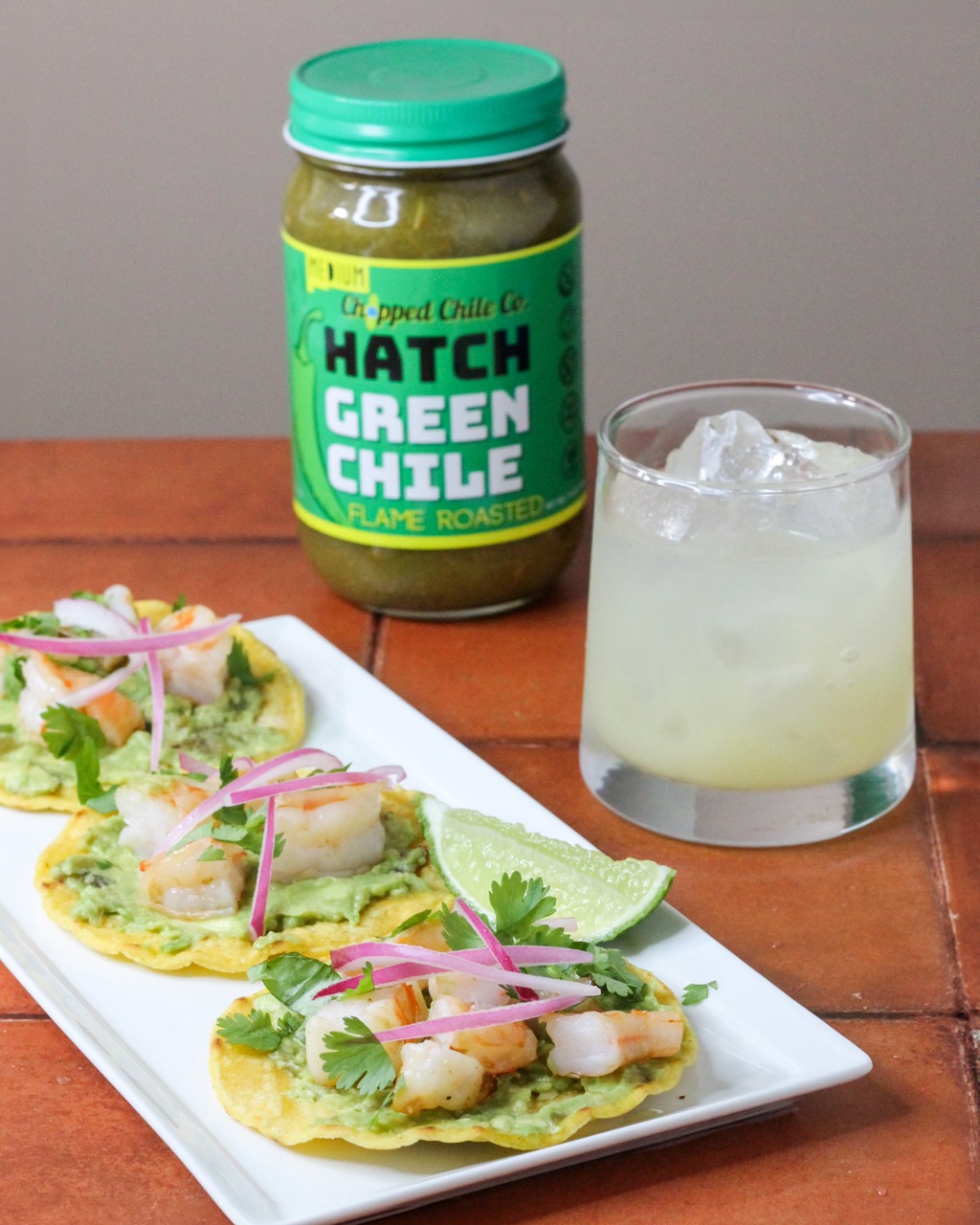
Green chile shrimp tostadas are a crisp corn shell spread with smashed avocado, piled with lime and chile shrimp, and finished with quick pickled red onions and cilantro. Eight of them serve four as a light dinner, twelve mini ones feed a bigger group standing up, and the whole thing takes twenty five minutes!
They're bright and cool and a little hot all at once, and almost every part can be done in advance except the final assembly. Start the pickled onions before anything else, because they only need fifteen minutes and they're better at thirty, then work backward from there. The shrimp take about four minutes in total, and you go by the shape of the shrimp rather than by the clock.
Jump to
Cooking the shrimp
Here's the only cue you need. A raw shrimp is nearly straight, and as it cooks it contracts into a loose C and turns pink and opaque, and that's done. Let it keep going and it pulls into a tight O, which is the visual signal that the proteins have squeezed their water out. That's the shrimp everybody has been served in a restaurant and been disappointed by.
Medium shrimp over medium high heat are usually done in about two minutes a side, sometimes less than that. Take the first one out and cut into it if you aren't sure. USDA guidance for seafood is 145°F, and shrimp hit that at about the moment they turn opaque all the way through.
Pat them dry before they go into the oil, because wet shrimp steam instead of searing and the surface never browns. Then toss them with the oil, lime and red pepper flakes and get them straight into the pan. Don't let them sit in that mixture, because lime juice is acid and acid starts curing shrimp the way it does in ceviche. Fifteen minutes in there and the outsides firm up before they ever meet heat, and no amount of careful cooking fixes it afterward.
Give them room in the pan, too. Shrimp release water, so too many in the skillet at once drops the temperature and you end up poaching them gray instead of searing them. One pound is two batches in a normal skillet. Get them out as soon as they're done and let them cool a couple of minutes before you chop them, because a shrimp sitting in a hot pan is still cooking.
The pickled onions, and making more of them
Onions, vinegar, lime, honey and salt, fifteen minutes on the counter. What you get is closer to a quick dressed onion than a true brined pickle, and that's the right thing here: still sharp, still crunchy, softened just enough to eat raw on a tostada.
Slice them as thin as you possibly can, because that's the whole technique. Thick slices stay harsh and stringy no matter how long they sit in the liquid, so use a mandoline if you own one and a very sharp knife if you don't. Thirty minutes beats fifteen, so make them first, before anything else, and they'll turn a brighter pink while you work on the rest of it.
If you want a proper pickle that lives in the fridge, scale the liquid up rather than the onions: a whole sliced red onion in half a cup of vinegar, half a cup of water, a tablespoon of honey and a teaspoon of salt. That keeps about two weeks refrigerated, and it'll end up on your eggs, your tacos, your burgers and your beans for the whole two weeks!
The smashed avocado does two jobs
It's the flavor base and it's a moisture barrier. Spread over the whole shell, it sits between the crisp tostada and everything wet that lands on top of it, which buys you real time at the table.
Smash it lightly, a fork and a few passes, and stop while there are still lumps in it. Blended smooth it turns to paste and loses the texture that makes it worth doing in the first place. The two teaspoons of lime in the recipe are working on the color as much as on the flavor, since avocado browns on contact with air and acid slows that down, and if the bowl has to wait even twenty minutes, press plastic wrap right onto the surface. Air is what browns it, not time.
One tablespoon of chile gives you a background note and two puts it out front. Either one is right for a single avocado and the recipe allows for both, and two is what I'd do. Drain it first, because roasted chile carries its own liquid and it can loosen the avocado into something that slides off the shell.
Keeping the tostada crisp
Assemble to order: avocado, then shrimp, then cilantro, then a few strips of onion, and straight to the table. If you're feeding people, set the components out in bowls and let everybody build their own, which solves the problem completely and is more fun anyway.
Store bought tostada shells go stale in the bag, and a stale one tastes like nothing at all. Warm them in a 350°F oven for three or four minutes before you build, because it costs you nothing and the difference is obvious. To make your own, brush corn tortillas lightly with oil and bake them at 400°F for about eight minutes, turning once, until they're rigid and blistered.
What can be made ahead
Most of it, as it happens. The pickled onions can be done hours ahead, or up to two weeks ahead in the scaled up version. The shrimp can be cooked a day ahead and refrigerated, and USDA guidance for cooked seafood is 3 to 4 days, though for something you're eating cold on a tostada the same day or the next is much better eating. Don't reheat them, because they're good cold and reheating is what costs you the texture.
The avocado holds for up to an hour with plastic wrap pressed onto the surface, and it's better made at the last minute regardless. The one thing you can't do ahead is assemble, because ten minutes is about all an assembled tostada has in it.
If the shrimp came out tough, or the shell went soft
Tough shrimp are almost always one of two things. Either they went past the loose C into a tight O, which is thirty seconds of extra cooking rather than anything complicated, or they sat in the lime mixture before they hit the pan and cured on the outside. Pull them earlier, and toss and cook them in the same minute.
If they came out gray rather than browned, the pan was crowded or they went in wet. Pat them dry, cook them in two batches, and you'll get color on them.
And if the shell went soft, either the avocado didn't reach the edges or the tostada sat built for too long. Spread the avocado right out to the rim, build at the table, and eat them standing there if you have to.
Serving, and what else to use these on
Eight regular tostadas serve four as a light meal, and twelve mini ones work better as an appetizer for a bigger group, because a full tostada is a two hand proposition and nobody can hold a drink at the same time.
A drizzle of green chile aioli over the top is the one addition worth making. Red chile salsa on the side puts both chiles on the same plate. And if you'd rather have these flavors as a sit down meal, the southwest chopped salad runs on the same lime, chile and avocado logic with a knife and fork.
The chile in here is our 16 oz jars of flame roasted Hatch green chile, Medium or Hot, four ingredients: Hatch chile, salt, garlic, lime juice. A tablespoon or two at a time means a jar goes a long way, so the rest of it usually ends up in green chile stew or beer queso. Frozen in 5 lb bags is the same chile in volume, the substitutions guide covers what to use if you can't get Hatch chile, and the recipe archive is free!
Common questions
How do I know when shrimp are done?
They curl into a loose C and turn pink and opaque. A tight O means they've gone too far. Medium shrimp over medium high heat usually take about two minutes a side.
Why are my shrimp rubbery?
They were cooked too long, or they sat in a lime marinade first. Acid begins curing shrimp the way it does in ceviche, so toss and cook straight away rather than marinating.
Can I use frozen shrimp for tostadas?
Yes. Thaw them in the refrigerator overnight or under cold running water, then pat them thoroughly dry. Wet shrimp steam instead of searing.
How long do quick pickled onions need?
Fifteen minutes works and thirty is better, so make them first. Slice the onion as thin as you can, which matters more than the time does.
How do I keep tostadas from going soggy?
Spread the avocado over the whole shell as a barrier and assemble at the last minute. Ten minutes is about how long an assembled tostada stays crisp.
How much green chile goes in smashed avocado?
One tablespoon for a background note, two if you want the chile forward. Drain it first so it doesn't loosen the avocado.
Can I make shrimp tostadas ahead for a party?
Make the parts ahead and let people build their own. Onions hours ahead, shrimp the day before and served cold, avocado within the hour. Don't assemble in advance.
Should I warm the tostada shells?
Yes. Three or four minutes in a 350°F oven wakes up a shell that's been sitting in a bag, and it takes no effort at all.
The short version
Make the onions first and slice them paper thin. Pat the shrimp dry, toss them with the oil and lime, and cook them in two batches until they curl into a loose C. Smash the avocado lumpy with lime and drained chile, warm the shells for a few minutes, then build them at the table and eat them inside ten minutes.
Ordering jars online? Mix any 6 single jars across flavors and heat levels. Jars are $12 each and ship free. Choose your jars, or find us in stores.