
Jump to recipe · Shop mix-and-match jars
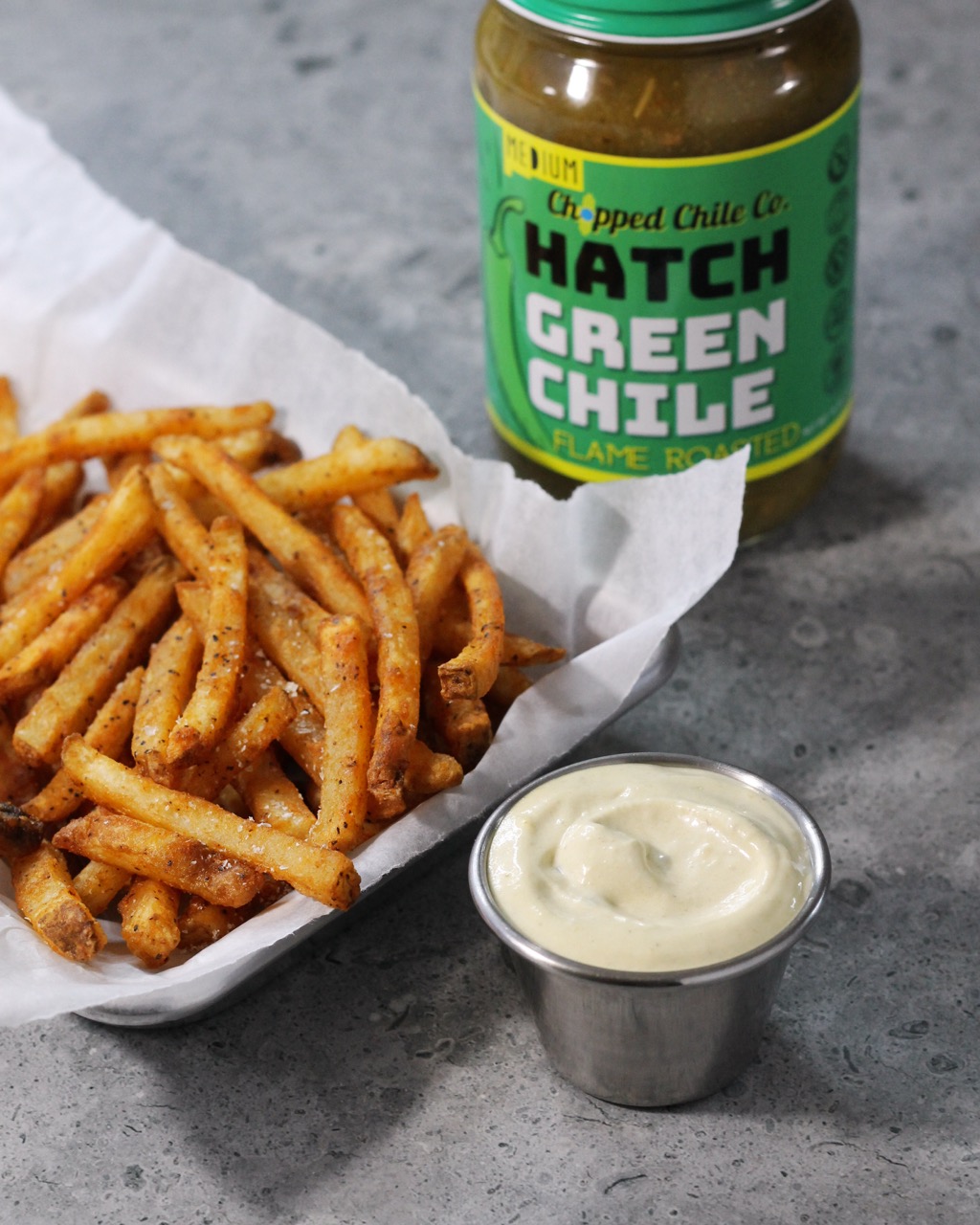
Green chile aioli is garlic, fresh lime, olive oil and a third of a cup of roasted Hatch green chile blended into a thick green sauce you'll want on everything: fries, burgers, chicken sandwiches, fish tacos, roasted potatoes, grilled corn. It makes about a cup and a half, which goes further than it sounds, and it's ten minutes of work plus an hour in the fridge.
There are two ways to get there and both of them are good. The from scratch version is a yolk emulsion, and it's the one with the olive oil flavor and the silkier texture. The three minute version stirs the same chile, garlic and lime into a jar of good mayonnaise, has no raw egg in it, and is close enough that we make it on purpose when there's a crowd coming. Pick whichever one fits your night!
Jump to
Raw eggs, and the safe way to do this
The yolks in the from scratch sauce are never cooked. That's how mayonnaise and aioli work, and it's worth saying plainly instead of glossing over it.
Use pasteurized eggs. Most supermarkets sell them in the shell, usually marked pasteurized right on the carton, and they behave identically in an emulsion. FDA guidance is to use pasteurized eggs in any recipe where the egg stays raw or undercooked.
Anyone who shouldn't eat raw egg shouldn't eat this version. That includes young children, older adults, pregnant women and anyone with a weakened immune system, per FDA and USDA guidance. Make the three minute version below for them instead, which has no raw egg in it at all.
Then keep it cold. Make it, chill it, and keep it in the refrigerator, because this isn't a sauce to leave out on a table all afternoon. None of that is a reason to skip the recipe. It's a reason to buy the right eggs.
The three minute version, and when to use it
Stir a third of a cup of drained roasted green chile, two to four cloves of minced garlic, a teaspoon of lime juice, salt and pepper into a cup and a half of good store bought mayonnaise, then chill it for an hour. That really is the whole method.
It takes three minutes, there's no raw egg in it, it keeps to the date on the mayonnaise jar, and it tastes close to the real thing. Commercial mayonnaise is a more stable emulsion than anything you'll build by hand, so it won't split on you either.
Make the from scratch version when you want the texture and the olive oil flavor, which is a real difference and the whole reason that recipe exists. Make this one when you're feeding a crowd, when you're short on time, or when somebody at the table shouldn't have raw egg. Neither is the lesser choice, and I'd happily set either one next to a plate of fries.
Building the emulsion
An emulsion is oil suspended in water, in droplets small enough to stay put. The yolk is what holds it together, because the lecithin in a yolk coats every droplet and keeps them from finding each other again. Everything in the method serves that one idea.
Start with the yolks, garlic and fresh lime juice on their own, and blend until the mixture is thick and opaque. That opacity is the emulsion forming, and it's your signal to carry on. Room temperature yolks get there more easily than cold ones, so give the eggs twenty minutes on the counter before you start.
The first quarter cup of oil is the part that wants your patience. Pour it in a slow thread, almost drop by drop, with the blender running, and once the sauce has visibly thickened you can speed up. Neutral oil goes in first and the olive oil second, which is the order in the recipe and it's deliberate: building the base on neutral oil gives you a stable emulsion before a stronger flavored oil joins in, and it keeps the olive oil from turning bitter, which it can do when it's whipped hard.
Use fresh lime juice rather than bottled. The recipe says so and it's right, because bottled juice is usually weaker and the acid is doing real work here for both the emulsion and the flavor. An immersion blender in a tall narrow cup is the easiest tool for all of this, since the head sits down in the yolks and pulls the oil into a controlled stream instead of letting it float on top.
One honest note on the name. Traditional aioli from Provence and Catalonia is garlic pounded into olive oil with no egg at all, so adding yolks makes this, strictly speaking, a garlic mayonnaise. Almost every restaurant in the country calls it aioli and so do we, but if you've had the real thing and wondered why yours tastes different, that's why.
The chile, and when it goes in
A third of a cup of roasted green chile in a cup and a half of aioli is a real presence. What you get is a green sauce rather than a white one with flecks in it, and that's exactly the point.
Drain it first. Roasted chile carries its own liquid, and that liquid thins a finished emulsion and can slacken it past the point of being spreadable, so give it a minute in a sieve. If you're using frozen chile, thaw it and drain it harder.
The chile goes in last, after the oil is fully emulsified, along with the salt and pepper, and you blend just until it's smooth. The reason the order matters is simply that water stirred in while you're still emulsifying is the quickest way to lose a sauce you've just spent ten minutes building.
Medium chile, two cloves of garlic and this much lime gives you a balanced sauce. The recipe note suggests Hot for more heat and it works well here, because the oil and yolk buffer heat considerably. Four cloves of garlic makes it properly assertive, and that's the version I'd make if it's going on a burger.
How long it keeps
Refrigerate it and use it within about four days. Homemade mayonnaise is a raw egg product with no preservatives, and four days is the guidance we'd give a customer rather than the outside limit some recipes quote. Keep it covered, in the coldest part of the fridge.
Give it an hour before you serve it. The garlic softens, the chile spreads through the sauce, and it's noticeably better cold and rested than it is straight out of the blender. Don't freeze it, either, because the emulsion separates on thawing and it doesn't come back.
Put it back in the fridge between uses, and if it's been sitting out on a table for more than a couple of hours, throw it out. The three minute version made with commercial mayonnaise is much more forgiving on every one of these points.
If the sauce broke
A broken emulsion looks thin and greasy and separated, and the cause is almost always oil that went in too fast. It's recoverable, so don't pour it down the drain.
Put a fresh egg yolk in a clean bowl and whisk it, then add the broken mixture into that yolk the same way you added the oil in the first place, in a very slow thread. You're rebuilding around a new yolk, and the broken sauce is now playing the part of the oil. It nearly always works.
If you'd rather not spend another egg, a teaspoon of cold water whisked in a clean bowl can sometimes start it off, though the yolk method is the more reliable of the two.
What to put it on
Fries are the obvious one and the reason most people make it in the first place. After that it's a good sauce on anything fried or grilled: burgers, chicken sandwiches, fish tacos, roasted potatoes, corn on the cob, grilled asparagus. Thin it with a little more lime juice and it works as a salad dressing.
It's also the right sauce for green chile shrimp tostadas, and it goes next to rolled tacos in place of sour cream.
The chile in here is our 16 oz jars of flame roasted Hatch green chile, Medium or Hot, four ingredients: Hatch chile, salt, garlic, lime juice. A third of a cup per batch means a jar makes about six. If you go through chile faster than that, frozen in 5 lb bags is the same chile in volume. The substitutions guide covers what to use if you can't get Hatch chile, and the recipe archive is free!
Common questions
Is homemade aioli safe to eat?
The yolks are raw, so use pasteurized eggs, which most supermarkets sell in the shell. FDA guidance is to use pasteurized eggs in anything where the egg stays raw. People who should avoid raw egg, including young children, older adults, pregnant women and anyone immunocompromised, should have the version made with store bought mayonnaise instead.
How long does homemade green chile aioli last?
About four days, refrigerated and covered. It's a raw egg sauce with no preservatives. The version made with commercial mayonnaise keeps to the date on the jar.
Why did my aioli break?
The oil went in too fast, or the yolk base wasn't thick before the oil started. Fix it by whisking a fresh yolk in a clean bowl and adding the broken sauce into it very slowly.
Can I make aioli without raw egg?
Yes. Stir the chile, garlic, lime juice, salt and pepper into a cup and a half of good store bought mayonnaise and chill it for an hour. It takes three minutes and it's close.
When does the green chile go into aioli?
Last, after the oil is fully emulsified, and drain it first. Water added mid emulsion is the most common way to lose a sauce.
Is aioli the same as mayonnaise?
Traditional aioli is garlic and olive oil with no egg. This version uses yolks, which strictly makes it a garlic mayonnaise. Nearly everyone calls that aioli now.
Can I freeze aioli?
No, the emulsion separates when thawed and doesn't recover.
How spicy is green chile aioli?
Medium chile in a sauce this rich lands mild. The oil and yolk buffer heat, so Hot chile is a reasonable default if you like heat.
The short version
Use pasteurized eggs and let them come to room temperature. Blend the yolks, garlic and fresh lime until the mixture is thick and opaque, then add the neutral oil in a slow thread and the olive oil after it. Drained chile, salt and pepper go in last. Chill it an hour, use it within four days, and don't freeze it. If any of that is inconvenient tonight, the store bought mayonnaise version takes three minutes and it's nearly as good.
Ordering jars online? Mix any 6 single jars across flavors and heat levels. Jars are $12 each and ship free. Choose your jars, or find us in stores.