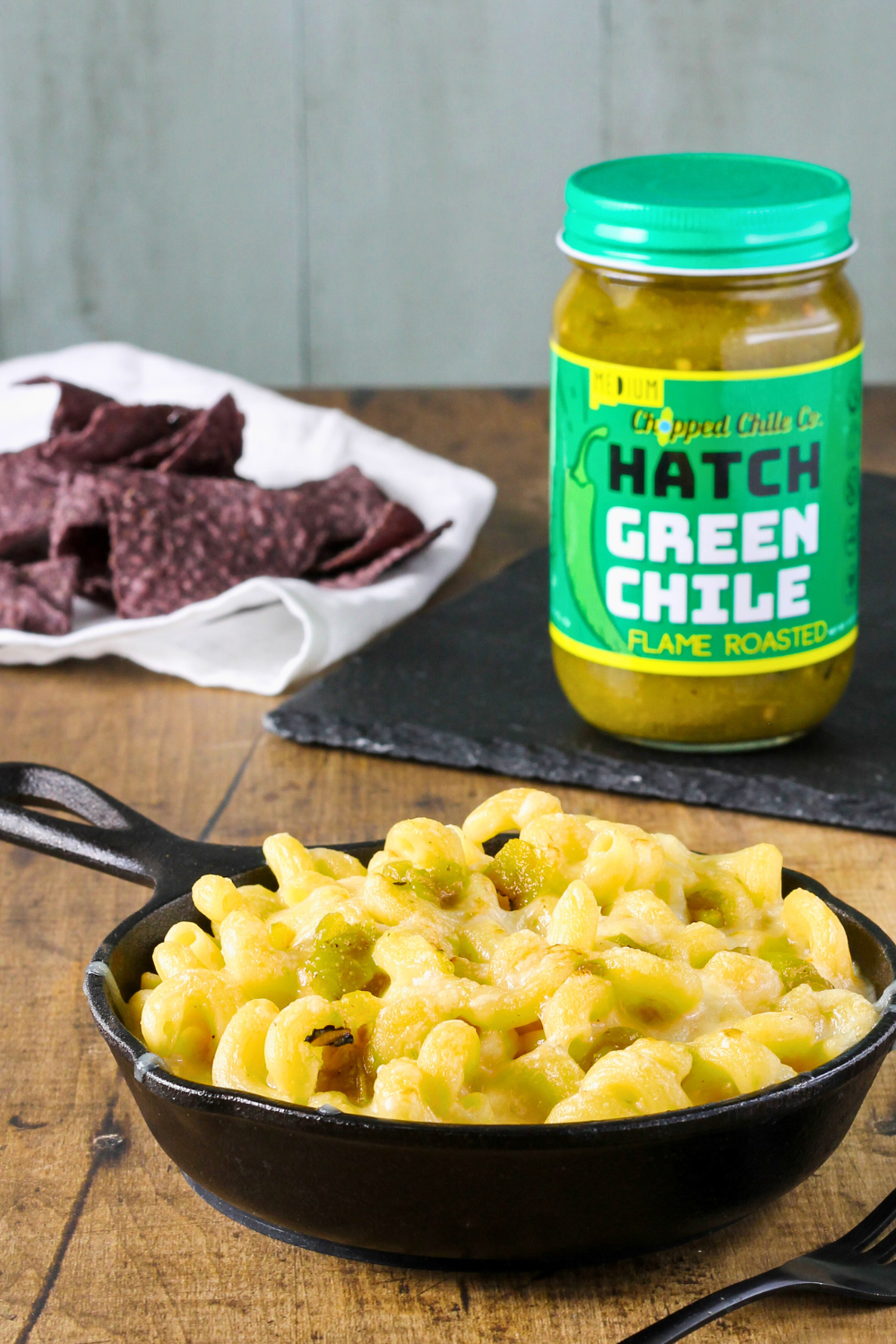

Green chile mac and cheese here is elbow pasta in a smoked cheddar and Monterey Jack sauce built on beer, milk and cream, with a full jar of roasted green chile stirred through it and twenty minutes in a 350°F oven to finish. A whole jar against six ounces of cheese is what makes the chile a component instead of a garnish, and it's why this tastes like green chile rather than like a mac and cheese that happens to be green.
Two things in the method are worth knowing before you start, and both are about timing rather than skill. The pasta comes out of the water two minutes early, and the chile goes in off the heat at the very end.
Jump to
Why the pasta comes out early
The recipe asks for two minutes less than the package calls for, and that isn't a rounding error. This dish finishes in a 350°F oven for twenty minutes, and pasta sitting in hot cheese sauce keeps cooking the entire time it's in there.
Boil it to package-perfect and what comes out of the oven is soft. Pull it early and it arrives exactly right, having absorbed some of the sauce on the way, which thickens the sauce a little and helps it cling to everything. It's the single biggest difference between a baked mac and cheese that works and one that doesn't, and it has nothing at all to do with the cheese you bought.
Keeping the sauce smooth
The sauce is a roux thickened with beer, milk and cream, then finished with cheese, and there are a few places where it either stays smooth or doesn't.
Cook the roux properly, which means two to three minutes until it's golden. Undercooked flour tastes raw and won't thicken cleanly, and it's the same step that makes or breaks a green chile enchilada sauce. Then add the liquid slowly and keep stirring. The beer goes in first and it'll go thick and foamy and look alarming, which is correct, and then the milk and cream go in gradually.
The cheese goes in off the direct heat, and you shred it yourself. Pre-shredded cheese is coated in starch so it won't clump in the bag, and that coating turns gritty in a sauce. High heat makes cheese proteins tighten and squeeze out their fat, which is the greasy separated sauce nobody wants. So take the pan off the burner, add the cheese, and stir until it's smooth.
The Monterey Jack and the smoked cheddar are doing different jobs. The Jack melts smoothly and carries the sauce, and the smoked cheddar brings the flavor. Smoked is the right call rather than a sharp white cheddar, because smoke meets the roasted chile halfway instead of competing with it.
The beer, and what it does
Half a cup of beer in a cheese sauce adds bitterness, acidity and malt, and the acidity is the useful part, because it cuts through what is otherwise a very rich pan of food.
A Mexican lager, or any light lager, is the right choice. It stays in the background and its mild bitterness balances the cream. What to stay away from is an IPA or anything strongly hopped, because hop bitterness concentrates as the sauce cooks and then concentrates again in the oven, and it turns harsh. That's the same warning that applies to green chile beer queso.
To skip the alcohol, use an extra half cup of milk. You lose the acidity that way, so add a small squeeze of lime or a little extra dry mustard to make up for it.
How much chile, and when it goes in
A full 16 oz jar, which is about two cups, into a dish that serves four. That's a genuinely chile-forward mac and cheese rather than one with a suggestion of green in it, and it's the whole reason to make this version instead of any other.
The chile goes in off the heat, after the cheese. Roasted chile has already been cooked once over flame, so boiling it in a sauce and then baking it for twenty minutes on top of that dulls the roast and turns the pieces soft. Adding it at the end is what lets it keep its character through the bake.
Drain it if your sauce looks loose, because roasted chile carries its own liquid and always does. This sauce has enough body to take it, but if you're working from frozen chile, thaw and drain it first, since thawed chile releases more than jarred.
Medium is the default for a dish you're putting in front of a table, and it's what I'd use. Hot works too, and the dairy buffers it more than you'd expect, so Hot lands milder here than the same chile would on eggs.
Storing and reheating
It keeps 3 to 4 days in the refrigerator, per USDA guidance for cooked leftovers, covered and cold within two hours.
It also freezes reasonably well, which is unusual for a cream sauce, because the starch from the pasta and the roux help hold the emulsion together. Expect it slightly grainier on thawing. Freeze it in portions and thaw it overnight in the fridge.
When you reheat it, add liquid. It sets firm in the cold, so a splash of milk and gentle heat is the way, either covered in a 325°F oven or low on the stove. High heat will break the sauce you were careful with the first time.
If the sauce went grainy or the pasta is soft
The sauce is grainy or oily
Cheese added over direct heat, or pre-shredded cheese. Off the heat next time, and shred your own.
The pasta is mushy
It was boiled to package time instead of two minutes short.
It's dry
Baked too long, or the sauce was too thick going in. It should look slightly looser than you want before it goes in the oven, because the pasta drinks some of it.
It tastes bitter
That's the beer. Use a lager next time.
It tastes flat
Salt and dry mustard. The mustard is in the recipe for a reason, which is that it sharpens cheese without tasting like mustard.
What to serve with it
The recipe note suggests blue corn tortilla chips for crunch, which is a good call. Otherwise you want something acidic to cut it, so a sharp green salad or some pickled onions.
If you're feeding people properly, green chile cheddar biscuits alongside is overkill in the correct direction, and green chile stew is the other dish that uses chile at this kind of volume.
The chile is our 16 oz jars of flame roasted Hatch green chile, Medium or Hot, four ingredients: Hatch chile, salt, garlic, lime juice. This recipe uses a whole one. If you cook like this regularly, frozen in 5 lb bags is the same chile in volume. And if you roasted and froze your own this fall, that's what should go in here, and the substitutions guide covers what to do if you can't get Hatch chile at all.
Common questions
Why undercook the pasta for baked mac and cheese?
Because it keeps cooking in hot sauce in the oven. Two minutes less than the package says gives you pasta that is right when it comes out rather than soft.
How much green chile goes in?
A full 16 oz jar, about two cups, for four servings. That makes it a chile dish rather than a mac and cheese with chile in it.
Why did my cheese sauce go grainy?
Cheese added over direct heat, or pre-shredded cheese with its starch coating. Take the pan off the burner and shred your own.
What beer should I use?
A Mexican lager or another light lager. Hoppy beers turn harsh as the sauce cooks and then bakes.
Can I make it without beer?
Yes. Use an extra half cup of milk and add a squeeze of lime or a little more dry mustard to replace the acidity.
When should the green chile go in?
Off the heat, after the cheese. It is already roasted, and cooking it further dulls the flavor and softens the pieces.
Can I freeze it?
Yes, better than most cream sauces because the pasta starch and roux hold the emulsion. Expect it slightly grainier, and reheat gently with a splash of milk.
The short version
Boil the pasta two minutes short of the package time, cook the roux until it's golden, and add the cheese off the heat after shredding it yourself. Use a lager rather than an IPA. The chile goes in last, off the heat, and then it bakes twenty minutes at 350°F. It keeps three to four days, and when you reheat it, add a splash of milk and keep the heat low.