
Jump to recipe · Shop mix-and-match jars
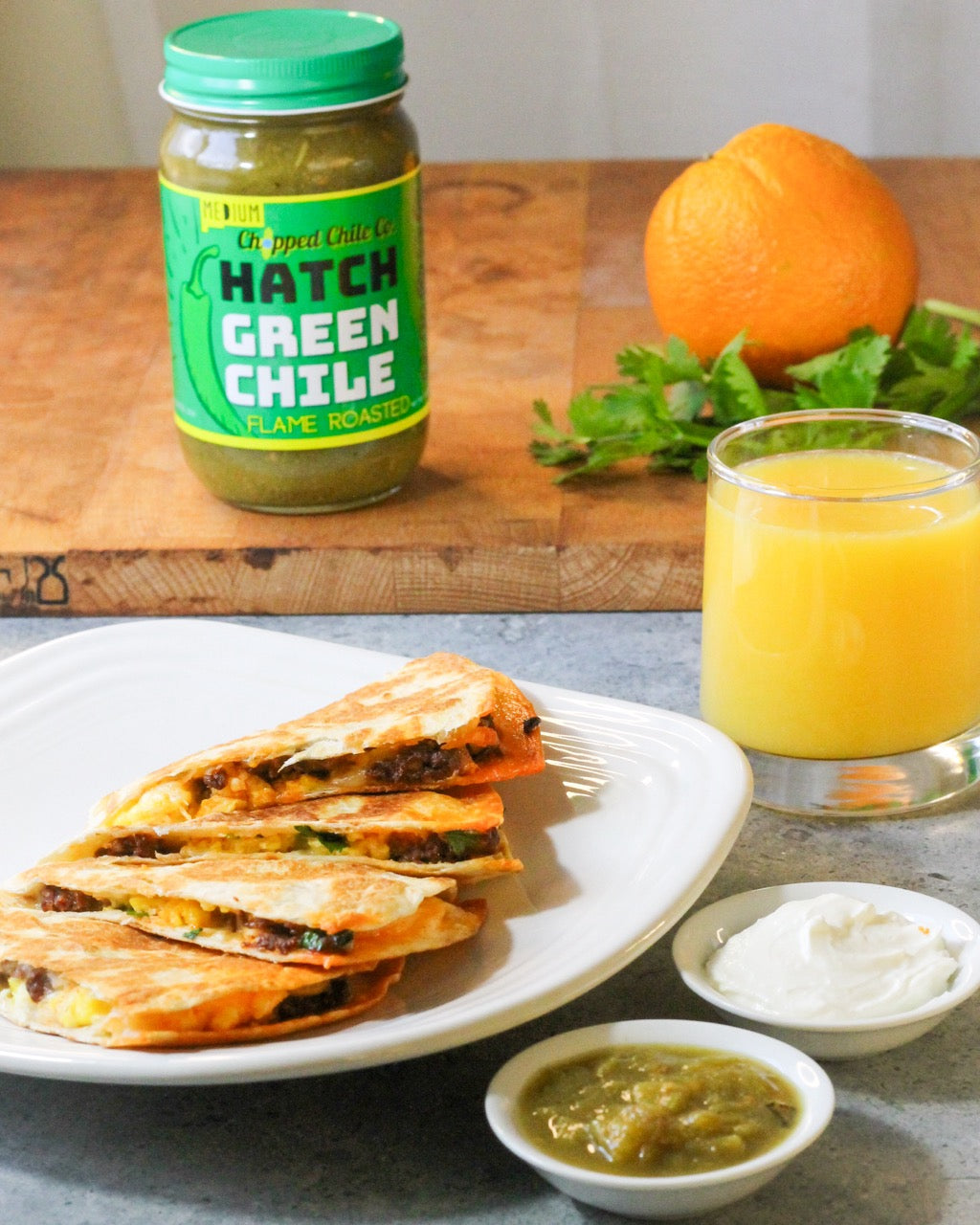
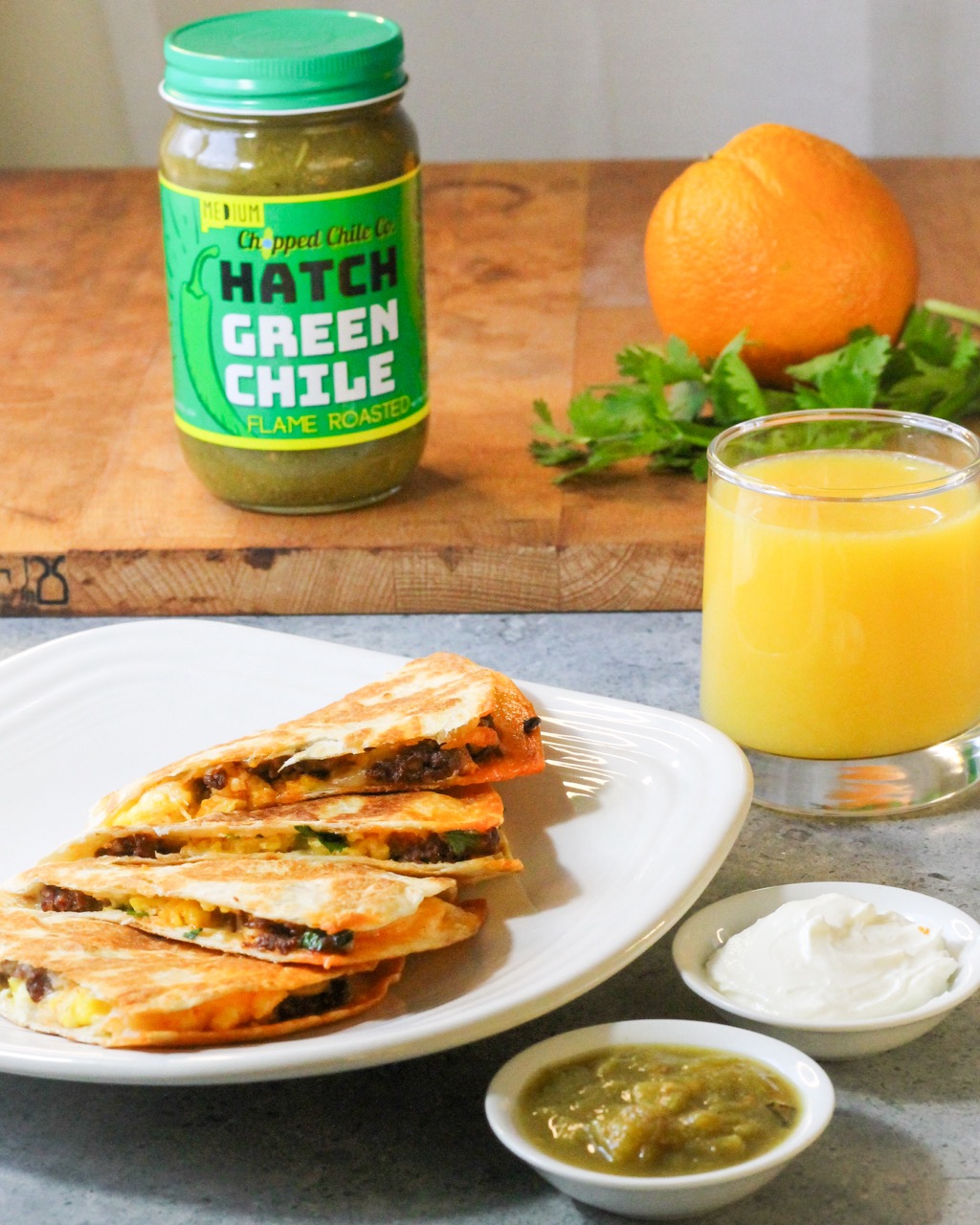
This is a big breakfast quesadilla: fresh Mexican chorizo, soft scrambled eggs, Monterey Jack, cilantro and half a cup of roasted Hatch green chile, folded into one large tortilla and griddled until the outside goes golden. It serves four and takes about thirty five minutes, and it's the kind of thing you make on a Saturday and then eat out of the freezer on a Tuesday!
Two choices shape the whole dish. Fresh Mexican chorizo rather than Spanish, because this kind crumbles and renders and the cured kind doesn't, and cheese on both sides of the filling rather than just underneath it, which is what makes the thing travel as one piece when you flip it. The rest is medium heat and a little patience.
Jump to
Which chorizo, and what to do with the fat
This recipe wants fresh Mexican chorizo, the soft raw kind sold in a tube or in bulk. Spanish chorizo is a cured, firm, sliceable sausage, and it's very good at what it does, but it won't crumble and it won't render, so it can't do this job. The two share a name and almost nothing else.
Fresh chorizo is raw pork, so cook it all the way through. USDA guidance for ground pork is 160°F, and chorizo at that point has gone from bright red and loose to darker and crumbly, which is easy enough to see in the pan.
It'll render a lot of orange red fat, and the recipe tells you to drain the excess, which is right. Keep a tablespoon of it back, though, and scramble the eggs in that instead of in plain butter. That fat carries the chile and paprika out of the sausage and into the eggs, and it's the single easiest upgrade in the whole recipe. Drain the rest, because chorizo fat left in the filling leaks out of the quesadilla and into the skillet.
Why the eggs come off early
Eggs keep cooking on residual heat, and these get a second cooking inside the quesadilla for another six minutes. So give them two minutes over medium heat, moving them slowly, and take them out while they're still glossy and only just set. They'll look a minute short of finished, and that's exactly where you want them.
Whisk them properly first with the salt and pepper in, and skip the milk or cream. Extra liquid in the eggs is extra liquid in the filling, and moisture is what keeps a tortilla from crisping. Six eggs across four quesadillas is generous, and it's what makes this a breakfast rather than a snack.
How it goes together
The recipe uses one large tortilla folded into a half moon rather than two tortillas stacked. That's the easier build, because you've only got one edge to keep closed and the fold holds itself together while you flip.
Order matters. Half the cheese goes down first, directly on the tortilla, covering one half of it. Then the chorizo, egg, cilantro and chile, spread evenly and kept back from the edge by about half an inch. Then the rest of the cheese goes on top of the filling, which is the step people skip and the one that counts, because melted cheese on both faces glues the filling to both halves of the tortilla and the whole thing moves as one piece. Fold it over and press down gently before it goes anywhere near the pan.
Shred the Monterey Jack yourself. Pre-shredded cheese comes coated in starch so it won't clump in the bag, and that coating makes it melt less smoothly, which is the last thing you want from the ingredient doing the structural work. Jack is the right cheese here for the same reason: it melts cleanly and it stretches. Cheddar has more flavor but it breaks and goes oily, so a mix of the two is the fair compromise, and that's what I usually do.
Heat, fat, and getting it crisp
Medium heat, three minutes a side. Push the burner higher and you get a scorched tortilla wrapped around cheese that never melted, so medium is doing real work here.
Drain the chile. Half a cup of roasted green chile across four quesadillas is a real amount, and roasted chile carries its own liquid, which steams the inside of the tortilla if you leave it in there. A minute in a sieve handles it, and frozen chile wants thawing and draining harder.
Butter browns better and tastes better, and oil tolerates more heat, so either one is a reasonable choice. Butter gives you a nuttier, more golden surface and it will start to go if the pan gets away from you, so when you're cooking four of these in sequence, wipe the pan between batches, because the butter solids darken and turn bitter.
Press it lightly with a spatula once it's in the pan, since more contact with the surface means more browning. Then let it sit a minute on the board before you cut it. Straight out of the pan the cheese is still liquid and the filling runs, and a minute of rest sets it enough to hold its shape.
Making them ahead and freezing them
This is one of the better breakfasts to batch, and it holds up far better than most egg dishes do.
Cooked and refrigerated, they keep 3 to 4 days, per USDA guidance for cooked leftovers, cooled and covered within two hours. They also freeze well for a couple of months: cook them, cool them completely, then wrap each one individually. Cooling completely first really does matter, because trapped steam turns into ice and then into a wet tortilla.
Reheat them from frozen in a dry skillet over medium heat, about four minutes a side, or in an air fryer. The microwave will heat one through and hand you a limp tortilla, which rather defeats the point. You can also make just the filling ahead and keep it refrigerated for three days, then build and cook to order in about eight minutes, and that's the version worth doing on a weekday morning.
If it fell apart, or it came out soft
If it came apart when you turned it, there wasn't enough cheese on top of the filling. Cheese underneath on its own only glues down one half of the tortilla, so the top half lifts away and takes nothing with it. Add that second layer next time and it'll hold together.
If it came out soft rather than crisp, it's almost always undrained chile or a pan that wasn't hot enough. Give the chile its minute in a sieve, stay on medium instead of dropping to low, and when you're reheating, reach for a skillet or an air fryer rather than the microwave.
And if the tortilla darkened before the cheese melted, the heat was too high. Bring the pan back to medium and give it the full three minutes a side.
What to put on it
Sour cream, a fried egg on top if you want it heavier, or green chile aioli, which is the better version of sour cream for this and the one I'd reach for. Red chile salsa on the side gives you both chiles at once, which is never a bad idea.
If you'd rather have the same idea with a plate and a fork, red chile huevos rancheros is the other New Mexico chile breakfast worth knowing, and it's also a timing dish.
The chile in here is our 16 oz jars of flame roasted Hatch green chile, Medium or Hot, four ingredients: Hatch chile, salt, garlic, lime juice. Half a cup per batch means a jar makes four rounds of these. If breakfast like this becomes a habit, frozen in 5 lb bags is the same chile in volume. The substitutions guide covers what to use if you can't get Hatch chile where you are, and the recipe archive is free!
Common questions
What kind of chorizo do I need for a breakfast quesadilla?
Fresh Mexican chorizo, the soft raw kind in a tube or sold in bulk. Spanish chorizo is cured and firm and won't crumble or render, so it doesn't work in this recipe.
Why should the eggs come out of the pan early?
Because they cook again inside the quesadilla for six minutes. Pull them while they're still glossy and barely set, about two minutes, or they end up dry.
Why does my quesadilla fall apart when I flip it?
There isn't enough cheese on top of the filling. Melted cheese on both sides glues the filling to both halves of the tortilla so it moves as one piece.
Why is my quesadilla soggy instead of crisp?
Undrained chile, or the heat was too low. Drain the chile in a sieve and cook over medium rather than low.
Should I use butter or oil for quesadillas?
Butter browns better and tastes better. Oil tolerates more heat without burning. If you cook several in sequence, wipe the pan between batches either way.
Can I freeze breakfast quesadillas?
Yes, for a couple of months. Cook them, cool completely, wrap individually. Reheat from frozen in a dry skillet or an air fryer, about four minutes a side, rather than in the microwave.
How spicy is a green chile chorizo quesadilla?
Chorizo brings its own heat, so this is the one recipe where Medium chile is genuinely enough for most people. Go Hot if you want it assertive.
What temperature does fresh chorizo need to reach?
Fresh chorizo is raw pork. USDA guidance for ground pork is 160°F, and it'll look dark and crumbly rather than bright red and loose.
The short version
Cook fresh Mexican chorizo to 160°F, drain it, and keep a spoonful of the fat back to scramble the eggs in. Take the eggs off the heat while they're still glossy. Cheese goes under the filling and over it, the chile gets drained, and then you fold, press, and cook on medium for three minutes a side. Let it rest a minute before you cut it.
Ordering jars online? Mix any 6 single jars across flavors and heat levels. Jars are $12 each and ship free. Choose your jars, or find us in stores.
1 comment
I love ❤️ your products thank you always sharing